




WHAT IT DOES IN THE GAME
BIG SPACE AMBITIONS. PIXEL-SIZED WORLDS.
YOUR MISSION.
YOUR SPACECRAFT.
YOUR CALL.
Plan a space mission.
Then live with your choices.
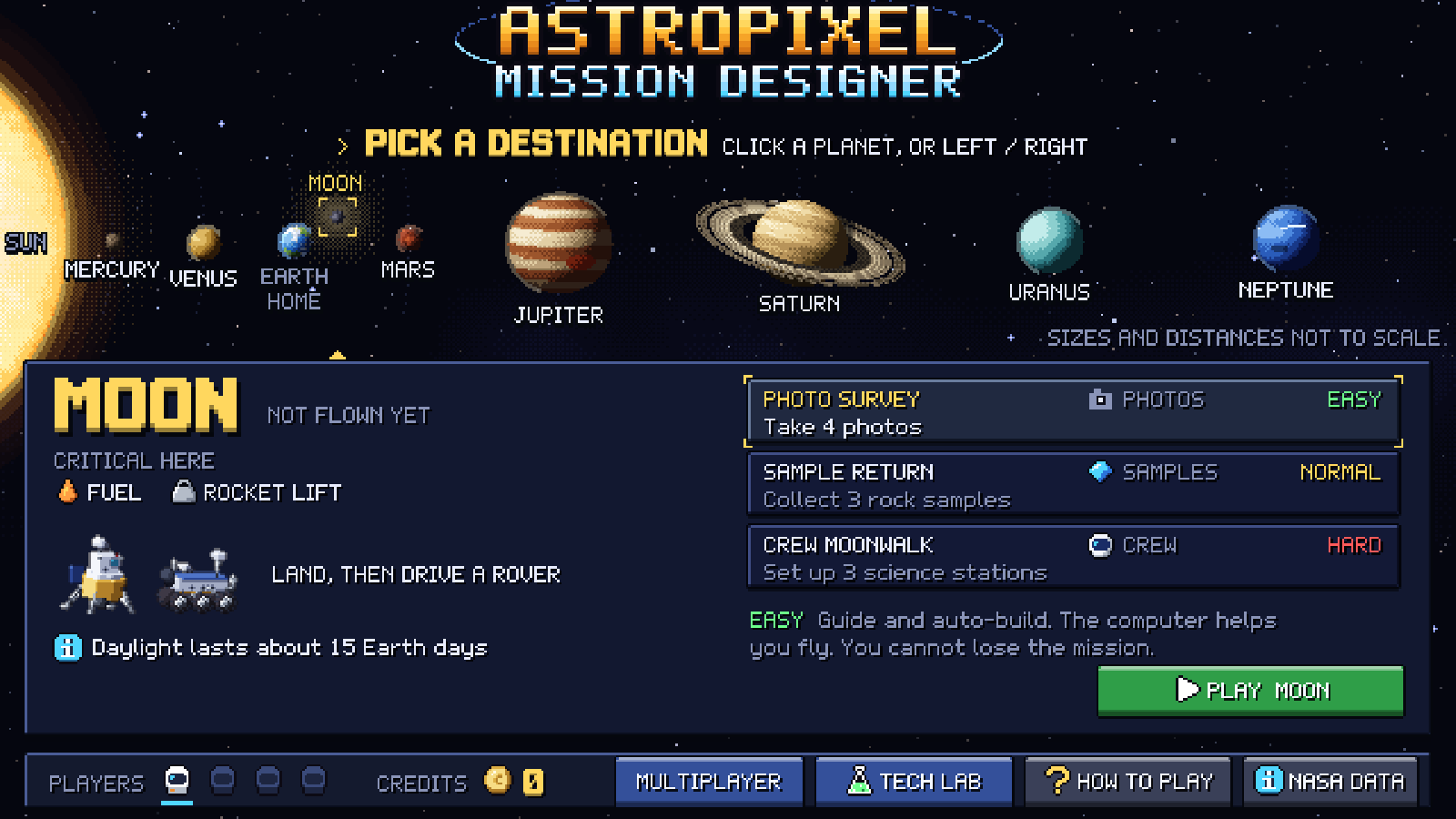
Build a spacecraft, fly it to one of eight worlds, from the Moon to Neptune, and find out exactly why it worked—or why it didn’t.
08 DESTINATIONS04 MISSION ROLES06 TEAM MEMBERS
LIVE FROM MISSION CONTROL● SIGNAL ACQUIRED
For students, young engineers, and anyone with a “what if?”
02 / BUILD. FLY. UNDERSTAND.
Space is a trade-off.
A bigger antenna sends more photos home. It also weighs more, so you need more fuel—which weighs more again.
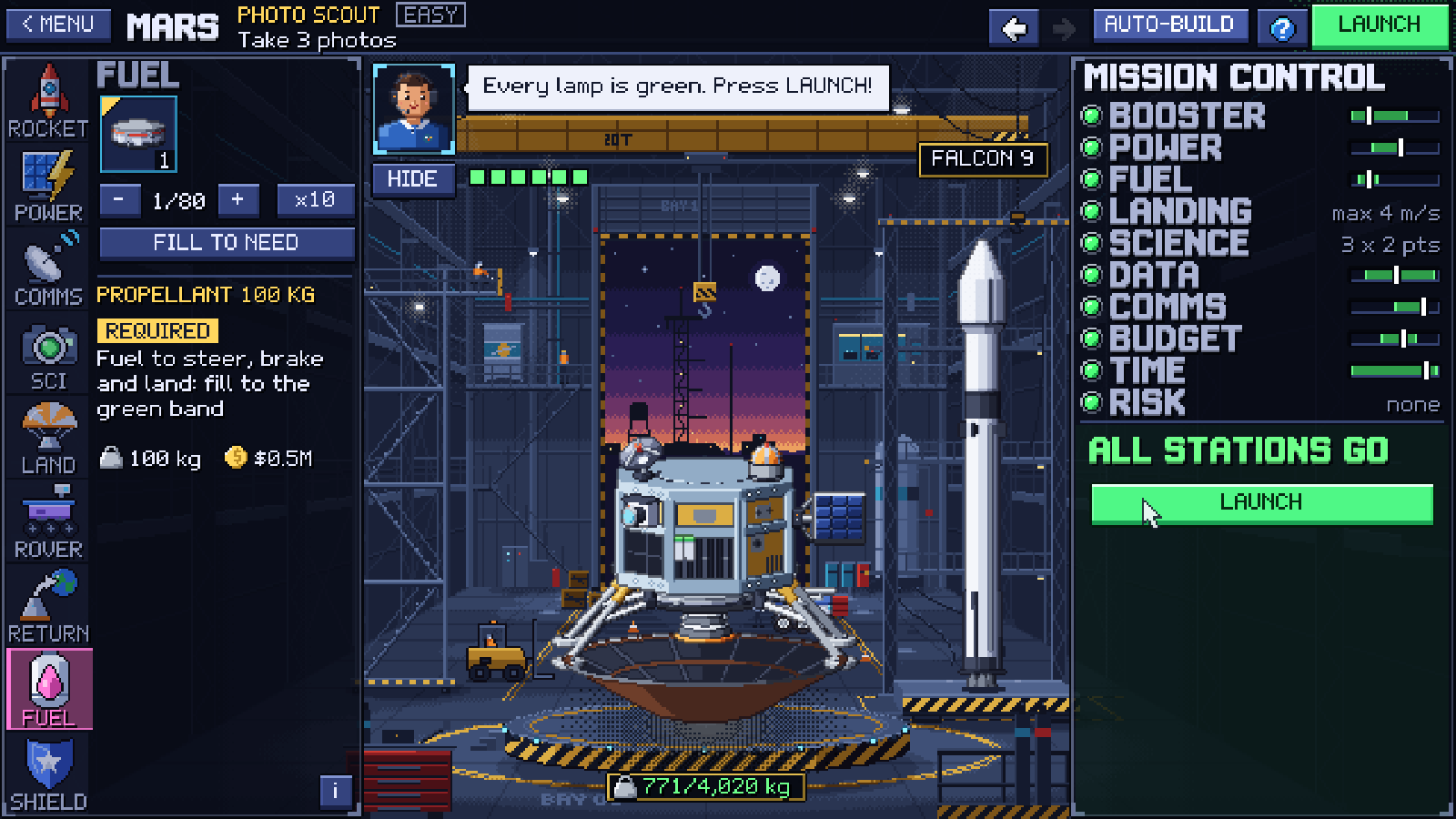
Every part is a decision.
Snap parts onto your ship. Mission Control lights one lamp per system and tells you in plain words what’s wrong.
ONE MISSION, START TO FINISH.
From an empty hangar to a mission report.
Playable today on all eight worlds, with an Easy, Normal and Hard task on each.
Pick a rocket and flight path, then fill the bays: power, radio, instruments, landing gear, rovers and fuel. Each lamp turns green only with NASA's margin.
03 / DESTINATION SELECT
Eight worlds. Eight lessons.
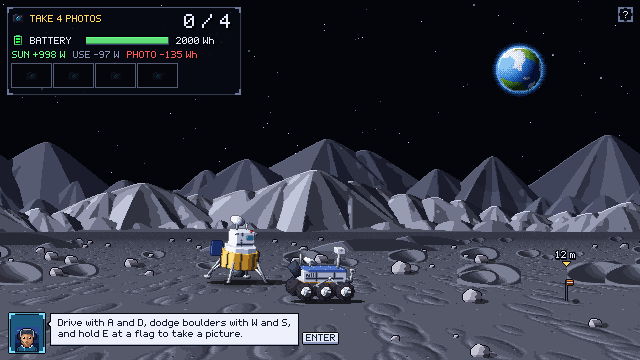
THE LESSON / FUEL VERSUS MASS
Land. Collect three samples. Fly home.
There’s no air to slow you down. Every metre per second of braking comes from fuel—and that fuel has to carry itself.
- GRAVITY
- 1.62 m/s²
- RADIO DELAY
- 1.3 seconds
- TASKS
- Photos · samples · crew
- REAL MISSIONS
- CAPSTONE · Apollo 11
Physical values come from NASA sources. Each world has an Easy, Normal and Hard task.
04 / THE ROCKET EQUATION, IN YOUR HANDS
More hardware. More fuel.
Add equipment. Watch how much fuel it drags in with it. This is the same rocket equation the game uses.
fuel = dry mass × (eΔv / vₑ − 1)
On the Moon, each kilogram of equipment needs about 1.7 kg of fuel to brake and land.
Model: 300 s specific impulse; vₑ ≈ 2.94 km/s. The demo’s review threshold uses a 35% spare-capacity rule.
MISSION CONTROL / LIVE MODEL● ONLINE
● Ship● Fuel│ Rocket limit
- Speed change
- 2.93 km/s
- Fuel needed
- 1,535 kg
- Total mass
- 2,435 kg
- Rocket capacity
- 4,020 kg
GO.
05 / REAL NUMBERS. VISIBLE CONSEQUENCES.
The NASA data inside.
Every number carries a source. Values invented to make it playable are labelled “game rule.” Select a data system to inspect it.
06 / THE PEOPLE BEHIND THE PIXELS
Six people. Shay Rafe3.
We wanted a place where anyone can try a whole mission—from the first sketch to the last photo sent home—and fail safely.
TEAM CONTRIBUTIONS
SELECT A CREWMATE TO EXPLORE THEIR WORK